
I’ll be honest with you. The first time I ran a discount for a small clothing shop I was helping manage, I priced it wrong, didn’t track anything, and walked away thinking discounts were a waste of money. Sales went up for two days, then dropped right back to normal, and I had no idea if I’d actually made or lost money on the whole thing.
It took me a few more rounds of trial and error (and a couple of embarrassing spreadsheet mistakes) before I understood that discounting isn’t just “make the price lower and hope people show up.” There’s a method to it, and once you get the basics down, it genuinely becomes one of the most reliable ways to grow a customer base and push revenue.
This article is everything I wish someone had told me before I started slashing prices on a whim. I’ll walk you through why discounts work, how to run them without torching your profit margins, the tools I’ve used along the way, and the mistakes that cost me time and money so you don’t have to repeat them.
Why Discounts Work in the First Place
Before getting into tactics, it helps to understand what’s actually happening in a customer’s brain when they see a discount.
People don’t just respond to saving money. They respond to the feeling of getting a deal. There’s a difference. A $10 discount on a $20 item feels huge. The same $10 off a $200 item barely registers. This is basic behavioral pricing, and it’s something I learned by watching customer reactions in person before I ever read about it in a marketing book.
When I worked the floor at that clothing shop, I noticed customers would walk past a rack of $45 shirts without a glance. Put a small “30% OFF” tag on the same rack, and suddenly people stopped, picked things up, and tried them on. The shirts hadn’t changed. The perception of value had.
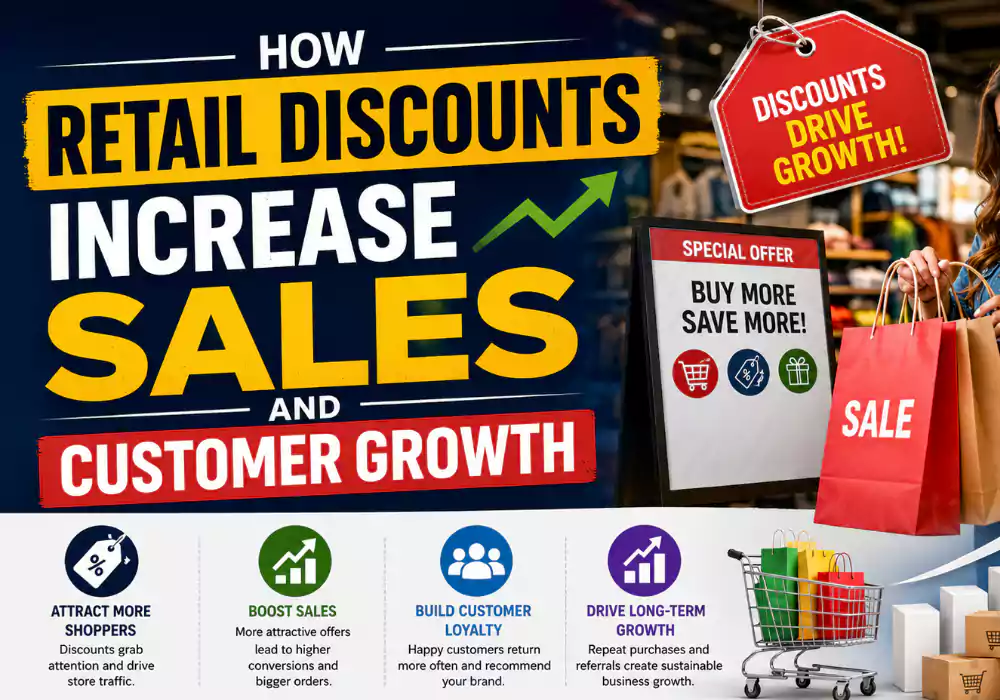
That’s the core mechanism behind why discounts increase sales:
- They create urgency (limited time, limited stock)
- They lower the psychological barrier to trying something new
- They make people feel like they’re being smart with their money
- They give hesitant buyers the final push to convert
And here’s the part that surprised me most: a well-structured discount doesn’t just bring in one-time bargain hunters. It often turns into long-term customer growth, which is the part most small business owners underestimate.
The Connection Between Discounts and Customer Growth
A discount gets someone through the door (or onto the website). What happens after that determines whether you got a one-time sale or a new customer.
I learned this the hard way during a holiday sale I ran for a friend’s home decor store. We discounted a popular candle set by 25%. Sales spiked, which felt great. But three months later, almost none of those discount shoppers had come back.
We changed our approach for the next sale. Instead of just discounting and hoping, we added:
- A follow-up email two weeks later with a smaller, personalized offer
- A simple loyalty point system for repeat purchases
- A short thank-you note in the package encouraging people to follow the store on social media
The next sale brought in fewer new transactions, but almost 30% of those buyers returned within 90 days. That’s when it clicked for me. The discount itself isn’t what builds customer growth. It’s the relationship you build right after the discount that does.
How Retail Discounts Actually Move the Needle on Sales
Let me break down the specific ways discounts drive sales, based on patterns I’ve seen repeat across different businesses I’ve worked with or advised.
1. They Reduce Decision Fatigue
Shoppers, especially online, are overwhelmed with options. A discount acts like a shortcut. It tells the brain “this one is a safe choice right now.” I’ve watched conversion rates on product pages jump noticeably just by adding a visible strike-through price, even when the discount was modest.
2. They Create a Reason to Buy Now Instead of Later
Most people delay purchases unless there’s a reason not to. “Sale ends Sunday” or “Only 12 left at this price” gives people a reason to act today instead of bookmarking the page and forgetting about it. I’ve tested this with a small online store using a countdown timer app, and abandoned cart rates dropped noticeably during the sale window.
3. They Bring in New Customers Who Wouldn’t Have Tried You Otherwise
Price-sensitive shoppers who were on the fence about a brand they didn’t know often need that extra nudge. A first-time discount code is one of the cheapest ways to acquire a new customer, especially compared to paid ads.
4. They Move Slow Inventory Without Feeling Like a Clearance Dump
This one matters more than people think. Sitting inventory costs money in storage, tied-up cash, and eventually markdowns that are far steeper than if you’d discounted earlier and strategically.
Step-by-Step: How to Run a Discount That Actually Grows Your Business
This is the process I now follow whenever I plan a promotion, whether it’s for a physical shop or an online store.
Step 1: Set a Clear Goal Before You Set a Price
Are you trying to clear old stock, attract new customers, boost slow-season sales, or reward existing customers? Each goal calls for a different type of discount. I used to skip this step and just pick a round number like 20% off everything. It worked sometimes, but it wasn’t strategic, and I had no way to measure success afterward.
Step 2: Know Your Margins Before You Touch the Price
This sounds obvious, but I’ve seen business owners discount a product 40% without realizing their margin on that item was only 35%. Pull up your cost numbers first. A simple spreadsheet or a tool like QuickBooks or Wave can show you exactly how much room you have to discount before you start losing money on each sale.
Step 3: Pick the Right Type of Discount for Your Goal
Here are the formats I’ve personally tested, with notes on when they worked best:
- Percentage off (e.g., 20% off): Great for general sales and clearing inventory. Easy for customers to understand instantly.
- Dollar amount off (e.g., $10 off $50): Works well for encouraging larger basket sizes. I’ve seen average order value increase noticeably with threshold-based discounts.
- Buy one, get one (BOGO): Excellent for moving paired or complementary products. Works especially well in food, beauty, and apparel.
- Free shipping threshold: This one consistently outperformed flat percentage discounts in my experience for online stores, because shipping cost is a huge cart-abandonment trigger.
- First-time buyer discount: Best for customer growth specifically, since it targets people who haven’t purchased yet.
- Loyalty or returning customer discount: Best for retention, not new growth, but critical for long-term revenue stability.
Step 4: Set a Time Limit
Open-ended discounts lose their power. I made this mistake early on by leaving a “Sale” banner up for almost two months. Customers stopped treating it as urgent, and it actually trained people to wait for discounts before buying anything at full price, which hurt overall revenue.
A tight window of 3 to 7 days tends to perform best based on what I’ve tracked across different campaigns.
Step 5: Promote It Where Your Customers Already Are
Don’t just rely on your website. Spread the message through:
- Email newsletters (Mailchimp and Klaviyo are both solid for small to mid-sized retailers)
- Instagram and Facebook posts, plus Stories with countdown stickers
- SMS marketing, which has surprisingly high open rates for time-sensitive offers
- In-store signage if you have a physical location
- Google Business Profile updates for local visibility
Step 6: Track Everything During the Sale
This is the step I skipped during my first attempt, and it’s why I couldn’t tell if the sale actually worked. Now I track:
- Total revenue during the sale period versus a normal period
- Number of new versus returning customers
- Average order value
- Profit margin after the discount is applied
- Traffic source (which channel drove the most conversions)
Google Analytics, your e-commerce platform’s built-in dashboard (Shopify and Square both have decent reporting), and a simple spreadsheet are usually enough. You don’t need anything fancy to start.
Step 7: Follow Up After the Sale Ends
This is the step that turns a discount into actual customer growth. Send a thank-you email, offer a smaller incentive for a second purchase, or invite first-time buyers to join a loyalty program. The follow-up is where the relationship either forms or doesn’t.
A Quick Example From My Own Experience
A small skincare brand I advised was struggling with a lot of one-time buyers and almost no repeat purchases. We ran a simple test.
For one campaign, we offered 15% off with no follow-up. For the next campaign, same discount, but we added an automated email three weeks later offering 10% off a refill of the product they’d bought.
The first campaign brought in solid short-term sales. The second campaign brought in slightly less in immediate sales but produced about three times more repeat purchases over the following two months. Lifetime customer value clearly mattered more than the size of the first sale.
That experience is part of why I now tell people: the discount gets attention, but the strategy around it is what builds an actual customer base.
Mistakes I’ve Made (and See Often) With Retail Discounts
Discounting Too Often
If every month has a sale, customers learn to wait. I’ve seen this happen with stores that ran “20% off everything” almost continuously, and it trained their audience to never buy at full price. Scarcity is part of what makes a discount work.
Not Calculating the True Cost
A discount that looks generous on the surface can quietly eat your entire profit margin. Always run the numbers before launching anything.
Discounting Without a Clear Audience
Blasting the same generic discount to your entire email list, including loyal customers who would have bought anyway, often just reduces your margin without bringing in anyone new. Segmenting your audience (new visitors versus repeat buyers) makes a noticeable difference.
Forgetting Mobile Shoppers
A huge chunk of retail traffic now comes from phones. If your discount code is hard to copy and paste, or your checkout process is clunky on mobile, you’ll lose conversions no matter how good the offer is. Test the entire purchase flow on your own phone before launching.
No Clear End Date
As mentioned earlier, open-ended sales lose urgency and can train shoppers to delay purchases indefinitely.
Ignoring Customer Data Afterward
The sale ends, and then nothing happens. No follow-up, no analysis, no plan for next time. This is the single biggest missed opportunity I’ve seen across the businesses I’ve worked with.
Tools and Platforms That Make This Easier
A few tools I’ve personally used or seen used effectively across different retail setups:
- Shopify or Square: For running the actual store and tracking discount performance through built-in reports.
- Klaviyo or Mailchimp: For email campaigns and automated follow-up sequences after a sale.
- Canva: For quickly designing sale banners and social graphics without needing a designer.
- Google Analytics: For understanding which channels brought people to the discount and whether they converted.
- QuickBooks or Wave: For checking margins before setting discount percentages.
- Honey or RetailMeNot listings: If you want extra visibility, getting your discount code listed on coupon aggregator sites can bring in extra traffic, though it tends to attract more price-sensitive, one-time shoppers.
How Often Should You Run Discounts?
There’s no single answer here, but based on what I’ve seen work without damaging brand perception, a useful rhythm is:
- One or two major seasonal sales per year (holidays, end of season)
- Smaller, targeted promotions tied to specific goals (new product launch, slow month, clearing old stock)
- An always-available first-time buyer discount, since this targets growth specifically and doesn’t train existing customers to wait around
Anything beyond that starts to risk training your audience to expect discounts as the norm rather than the exception.
Measuring Whether a Discount Was Actually Worth It
After running enough of these, I now use a simple checklist after every promotion:
- Did revenue increase enough to offset the reduced margin?
- How many of the buyers were new customers versus repeat customers?
- Did the average order value go up, stay flat, or drop?
- What percentage of new customers came back within 60 to 90 days?
- Would the same result have happened without a discount, through better merchandising or marketing alone?
That last question is one people skip, but it’s important. Sometimes a sale doesn’t actually create new demand. It just shifts purchases that would have happened anyway into a lower-margin window. Tracking customer behavior before, during, and after the sale helps you tell the difference.
Discounts Look Different Depending on Your Type of Business
One thing I had to learn through trial and error is that a discount strategy that works for a clothing boutique doesn’t automatically work for a coffee shop, a fitness studio, or an online supplement store. The mechanics are similar, but the details shift.
Physical retail stores tend to benefit most from clearance-style discounts on seasonal items and bundle deals that move multiple products at once. I’ve seen a shoe store pair a discounted pair of sneakers with a small markup on socks and laces, and the bundle still felt like a deal to the customer while protecting overall margin.
Online stores get more value from free shipping thresholds and first-time buyer codes, since the biggest barrier online is usually cart abandonment, not hesitation about the product itself. Adding a small popup offering 10% off in exchange for an email address is a tactic I’ve used repeatedly, and it consistently grows an email list faster than almost anything else.
Service-based or membership businesses, like gyms or studios, do better with introductory pricing rather than blanket percentage discounts. A discounted first month works because it gets someone to experience the actual service, and the habit formed during that month is what keeps them paying full price afterward.
Subscription or recurring-purchase businesses see the best results from loyalty-based discounts rather than acquisition discounts, since the goal is keeping people subscribed rather than getting a single transaction.
Knowing which category your business falls into helps you avoid copying a discount strategy that worked for someone else’s completely different business model.
A Few Questions I Get Asked Often
Does a small discount even make a difference, or does it need to be a big percentage to matter?
In my experience, even a 10% discount can move the needle if it’s framed well and tied to urgency. Bigger isn’t always better. A smaller discount with a clear deadline often outperforms a larger discount with no time pressure.
Will discounting hurt my brand if I do it too often?
Yes, this is a legitimate risk. Frequent, unstructured discounting can train customers to associate your brand with low prices instead of value, which makes it harder to sell at full price later. This is why having a clear schedule and reason behind every promotion matters so much.
Should I discount my best-selling products or my slow-moving ones?
Both, but for different reasons. Discounting a bestseller brings in new customers because it’s a known, trusted product. Discounting slow movers clears inventory and frees up cash. Mixing both into one sale tends to work better than only doing one or the other.
How do I know if a discount actually grew my customer base instead of just giving existing customers a cheaper price?
This goes back to tracking new versus returning customers during the sale. If most of your discount redemptions are coming from people already on your customer list, you’re rewarding loyalty, not growing your audience. Both are valuable, but they’re different goals, and it helps to know which one you actually achieved.
1. Why do discounts increase retail sales?
Discounts increase sales by reducing price barriers, attracting new customers, creating urgency, and encouraging larger purchases.
2. What is the most effective type of retail discount?
Percentage discounts, flash sales, and personalized offers are among the most effective because they clearly communicate value and motivate action.
3. Can too many discounts hurt a business?
Yes. Excessive discounting can reduce profit margins, damage brand perception, and train customers to wait for sales before purchasing.
4. How do retailers decide when to offer discounts?
Retailers analyze sales trends, inventory levels, seasonal demand, customer behavior, and competitive market conditions before launching promotions.
5. Are personalized discounts better than general discounts?
In many cases, yes. Personalized discounts are more relevant to customers and often generate higher conversion rates while preserving profitability.