
How One Financial Decision Can Affect 10 Years

One financial decision may look small in the moment, but its impact can quietly stretch across years and even reshape your entire financial life. Whether it is taking a loan, delaying an investment, or overspending on lifestyle upgrades, every money-related choice creates a chain reaction that influences your future wealth, stability, and opportunities.

Most people focus on monthly income and short-term expenses, but real financial success is built through long-term financial planning and disciplined money habits. A single decision like choosing to invest early or postponing savings—can significantly change how much wealth you accumulate over the next 10 years due to the power of compounding and opportunity cost.

In today’s fast-moving world, emotional spending, impulse buying, and lifestyle inflation often dominate financial behavior. People tend to prioritize instant satisfaction over long-term security, not realizing that these choices slowly reduce their ability to build wealth. Over time, even small leaks in your financial system can grow into major setbacks.

Understanding how financial habits shape long-term outcomes is the first step toward building real financial independence. Once you see money decisions through a 10-year lens instead of a 10-day lens, your approach to spending, saving, and investing begins to change fundamentally.

How One Financial Decision Can Affect 10 Years

The Psychology Behind Financial Decisions

Financial decisions are rarely purely logical. In most cases, they are influenced by emotions, habits, environment, and social pressure. Even when people understand basic financial planning principles, they still end up making choices that harm their long-term wealth. This happens because the human brain is naturally wired to prioritize short-term comfort over long-term gains.

In behavioral finance, this is often explained through cognitive biases that affect spending and saving patterns. People tend to overvalue immediate rewards like buying a new phone or going on a vacation—while undervaluing future benefits like investing or building an emergency fund. This is one of the main reasons why long-term financial goals often get ignored.

Why Humans Make Short-Term Money Choices

A major reason behind poor financial decisions is instant gratification. When you earn money, there is a natural urge to enjoy it immediately. Buying something desirable provides a quick emotional reward, while investing or saving feels slow and less exciting. This emotional imbalance pushes many people toward unnecessary spending.

Social comparison also plays a big role. Seeing friends or colleagues upgrade their lifestyle buying new gadgets, cars, or luxury items creates pressure to match their spending patterns. This often leads to lifestyle inflation, where income increases but savings remain the same or even decrease.

Over time, these small decisions accumulate and reduce financial freedom. What seems like a harmless purchase today can become a long-term limitation on wealth creation.

The “Small Leak, Big Debt” Effect

One of the most dangerous financial patterns is the idea that small expenses don’t matter. Daily spending on food delivery, subscriptions, EMI purchases, and impulse shopping may feel insignificant individually, but together they create a continuous drain on income.

This is often called the “small leak effect,” where money slowly leaks out without being tracked properly. The real danger is that these expenses reduce your ability to invest or save consistently. Over 10 years, this can result in a massive gap in wealth compared to someone who controls such spending.

Even worse, these leaks can sometimes lead to dependency on credit cards or personal loans, which introduces interest payments and long-term debt pressure. This is how small financial habits slowly evolve into major financial problems.

Understanding this psychology is essential because improving financial outcomes is not just about earning more money it is about controlling behavior, emotions, and decision-making patterns that shape your financial future.

How One Wrong Financial Decision Can Change 10 Years

A single financial mistake does not always feel serious at the beginning. In fact, most bad financial decisions look harmless in the short term. The real impact becomes visible only after several years when interest, lost opportunities, and compounding effects start stacking up. This is why financial planning is not just about today’s comfort but also about understanding long-term consequences.

One wrong decision can slowly reshape your entire financial path. It can delay your goals like buying a home, achieving financial independence, or building retirement savings. More importantly, it reduces your flexibility in life because money gets locked in debt, poor investments, or unnecessary expenses.

Taking Unnecessary Debt

Debt is one of the most powerful financial tools, but when used without planning, it becomes a long-term burden. Personal loans, credit card balances, and EMIs often start with small monthly payments that feel manageable. However, the real cost is hidden in interest rates that accumulate over time.

For example, a loan that seems affordable today can stretch your repayment cycle for years. Instead of building wealth, a significant portion of your income goes into paying interest. This reduces your ability to save, invest, or take financial opportunities when they arise.

Over a 10-year period, repeated borrowing can create a cycle where you are always repaying past decisions instead of building future wealth. This is commonly known as the debt trap, where financial freedom becomes harder to achieve with each new loan.

Ignoring Savings in Early Years

Another critical mistake is delaying savings and investments. Many people believe they will start saving “later” when income increases or expenses reduce. However, this delay comes at a high cost because it removes the advantage of time.

Compounding works best when investments are made early. Even small monthly investments in the beginning can grow significantly over a decade. But when you delay, you not only lose potential growth but also need to invest much more later to reach the same financial goal.

Over 10 years, this difference becomes very large. Early savers often build strong financial cushions, while late starters struggle to catch up even with higher income.

Investing in the Wrong Assets

Poor investment decisions can also change your financial future drastically. Many people chase quick returns through speculation, trending stocks, or unverified investment schemes without understanding risk.

When investments are made without proper financial knowledge, losses can reduce both capital and confidence. This often leads to emotional decisions like exiting markets early or avoiding investing altogether in the future.

On the other hand, disciplined investing in diversified assets typically builds steady wealth over time. The difference between informed investing and random speculation becomes extremely visible over a 10-year horizon.

In short, one wrong financial decision does not just affect money it affects opportunities, lifestyle choices, and long-term financial security.

Real-Life Scenarios of Financial Decisions Impacting a Decade

Financial consequences become much easier to understand when we look at real-life patterns instead of theory. In daily life, people rarely notice how one decision silently grows into a long-term outcome. But when you zoom out and observe a 10-year timeline, the difference between good and bad financial decisions becomes extremely clear.

These scenarios are not rare cases they represent common financial behavior seen across salaried professionals, freelancers, and small business owners. The key difference is not income level, but how money decisions are handled consistently over time.

Case Study 1 – Credit Card Debt Cycle

Credit cards offer convenience, but they can also become one of the biggest long-term financial burdens when not used carefully. Many people start with small unpaid balances, thinking they will clear them in the next billing cycle. However, when repayments are delayed or only minimum amounts are paid, interest starts compounding at a high rate.

A small unpaid balance, such as ₹50,000, can slowly grow into a much larger liability over time if it keeps rolling forward. As interest accumulates, a large portion of monthly income goes toward servicing old debt instead of creating new savings. Over 10 years, this cycle can significantly reduce financial stability and limit investment opportunities.

The emotional stress of carrying debt also affects decision-making. People often avoid planning long-term investments because they feel financially “stuck,” even if their income increases.

Case Study 2 – Early Investing vs Late Investing

Time plays one of the most important roles in wealth creation. Two individuals earning similar incomes can end up with completely different financial outcomes simply because they started investing at different times.

A person who begins investing early in life, even with small monthly contributions, benefits from long-term compounding. Their money has more time to grow, and returns begin generating additional returns over the years. This creates a strong financial base by the end of a decade.

On the other hand, someone who delays investing may need to invest much higher amounts later to reach the same financial goal. Even with higher income, they often struggle to match the wealth created by early investors because they lost valuable time in the beginning.

This gap becomes especially visible after 10 years, where early discipline translates into significantly higher net worth.

Case Study 3 – Lifestyle Inflation After Salary Increase

Lifestyle inflation is one of the most silent wealth killers. When income increases, many people immediately upgrade their lifestyle—better phone, expensive gadgets, new car EMIs, frequent dining out, and higher living costs. While some improvement in lifestyle is natural, uncontrolled spending growth often consumes most of the income increase.

As a result, even though salary grows, savings remain the same or increase very slowly. This creates a situation where financial stress does not reduce despite higher earnings. Over time, people feel that they are always working hard but never becoming financially secure.

Over a 10-year period, controlled spending versus lifestyle inflation can lead to completely different financial realities. One leads to wealth accumulation, while the other leads to constant financial pressure despite higher income.

The Power of One Good Financial Decision

While one bad financial decision can create long-term pressure, one good decision can completely change your financial direction. The interesting part is that good financial decisions do not always require high income or complex strategies. Often, simple and consistent actions taken early can create powerful results over a 10-year period.

The key difference is direction. A small positive financial habit, when repeated over time, builds momentum. Instead of money leaking out through unnecessary expenses or high-interest debt, it starts growing through savings, investments, and disciplined planning. This shift gradually builds financial confidence and stability.

Starting SIP Early

One of the most effective financial decisions is starting a Systematic Investment Plan (SIP) early. Even small monthly investments can create significant wealth when given enough time. The real strength of SIP lies in compounding, where your returns also start generating returns over time.

When you start early, you give your money more time to grow. Over a 10-year period, consistent investing helps smooth out market fluctuations and builds a disciplined wealth creation habit. Even if the amount is small, consistency matters more than size.

Many people delay investing thinking they need a large amount to begin. However, starting small is far better than waiting for the “perfect time,” which often never comes.

Building an Emergency Fund

An emergency fund is another powerful financial decision that protects your entire financial system. Life is unpredictable medical emergencies, job loss, or sudden expenses can disrupt financial stability if there is no backup plan.

Having an emergency fund ensures that you do not rely on credit cards or loans during difficult situations. This helps prevent debt accumulation and keeps your long-term financial goals on track. It also provides mental peace, allowing better decision-making during stressful times.

Over a decade, this simple buffer can save you from multiple financial setbacks that could otherwise derail your progress.

Choosing a Low-Debt Lifestyle

One of the strongest long-term financial advantages comes from avoiding unnecessary debt. A low-debt lifestyle does not mean avoiding all borrowing, but rather using credit carefully and purposefully.

When you avoid high-interest loans and unnecessary EMIs, a larger portion of your income becomes available for saving and investing. This increases financial flexibility and reduces long-term pressure. It also gives you freedom to take opportunities when they arise instead of being tied to monthly repayments.

Over 10 years, this decision alone can significantly improve net worth and financial independence. People with low debt consistently build stronger financial foundations compared to those with high monthly obligations.

10-Year Financial Impact Comparison (Good vs Bad Decisions)

When we look at money decisions over a short period, the difference often seems small or even insignificant. But when the same decisions are extended over 10 years, the gap becomes extremely large. This is where financial habits either compound your wealth or slowly erode it.

The real impact of financial planning is not visible in monthly results but in long-term outcomes like net worth, financial security, and lifestyle freedom. Two people earning the same income can end up in completely different financial positions depending on how they manage spending, saving, debt, and investments.

A simple way to understand this is to compare two financial paths—one disciplined and one careless. The disciplined path focuses on saving early, avoiding unnecessary debt, and investing consistently. The careless path focuses on high spending, delayed savings, and frequent borrowing.

Over 10 years, even small differences in behavior create massive gaps in financial outcomes.

For example, a person who consistently invests a portion of income through SIPs and avoids high-interest debt gradually builds a strong asset base. Their money starts generating returns, which further increases wealth. This creates a positive cycle of financial growth.

On the other hand, someone who spends most of their income on lifestyle upgrades, EMIs, and impulsive purchases often ends up with little to no savings. Even if their income increases, expenses rise at the same pace, leaving no room for wealth creation. Over time, financial stress increases because there is no backup or investment growth.

Another important difference is financial flexibility. A person with savings and investments can take advantage of opportunities like starting a business, changing careers, or investing in new assets. But someone with high debt or low savings often cannot take risks because their monthly obligations limit freedom.

Common Financial Mistakes That Look Small But Grow Big

Most long-term financial problems don’t start as big mistakes. They begin as small, normal-looking decisions that feel harmless at the time. The issue is that money habits compound just like investments do—either in your favor or against you. Over 10 years, these “small” choices can quietly reshape your entire financial position.

The danger lies in perception. When a financial decision doesn’t immediately hurt, people assume it is safe. But in reality, the real cost is delayed and accumulates over time in the form of lost savings, missed investments, and growing debt obligations.

Delaying Investment for “Better Time”

One of the most common mistakes is waiting for the perfect time to start investing. Many people believe they will begin once their salary increases or expenses reduce. However, this delay removes the most powerful advantage in wealth building time.

Even a few years of delay can significantly reduce long-term returns because compounding has less time to work. Over a 10-year horizon, early investors often build much stronger financial positions compared to those who started late, even if the late starter invests larger amounts later.

This creates a permanent gap that is difficult to recover from, simply because the starting point was postponed.

Buying Unnecessary Gadgets on EMI

EMIs make expensive purchases feel affordable, but they often lead to long-term financial pressure. A gadget or phone purchased on EMI may seem like a small monthly burden, but when multiple EMIs stack up, they reduce monthly cash flow significantly.

Over time, these commitments limit your ability to save or invest consistently. What starts as a “small monthly payment” becomes a continuous drain on income. More importantly, it creates a habit of financing lifestyle upgrades through debt instead of savings.

Over 10 years, repeated EMI purchases can take away a large portion of potential wealth creation.

Not Tracking Expenses Properly

Another silent financial mistake is not knowing where money goes. Without expense tracking, small daily spending often goes unnoticed. Food delivery, subscriptions, impulse purchases, and convenience spending slowly reduce savings without creating awareness.

This leads to a situation where income increases but savings do not. People often feel confused about why they are not able to build wealth despite earning well.

Tracking expenses is not about restriction—it is about awareness. Once spending patterns become visible, better financial decisions naturally follow.

Ignoring Insurance and Financial Protection

Many people avoid insurance or treat it as unnecessary expense. However, lack of financial protection can turn a small emergency into a major financial crisis. Medical emergencies, accidents, or unexpected income loss can force people to use savings or take high-interest loans.

How to Make Better Financial Decisions Today

Improving your financial future does not require a sudden transformation. In most cases, better outcomes come from small, consistent changes in daily money behavior. The goal is not to become perfect with money overnight, but to reduce financial mistakes and increase smart decisions that compound over time.

When you start making conscious financial choices, you gradually shift from reactive spending to planned money management. This shift alone can significantly improve your financial position over the next 10 years because it reduces wasteful expenses and increases savings capacity.

Follow the 24-Hour Rule Before Spending

One simple but powerful habit is delaying non-essential purchases. The 24-hour rule means you wait at least one day before buying anything that is not necessary. This pause gives your mind time to separate emotional desire from real need.

Most impulsive purchases lose importance after a short cooling period. By delaying decisions, you reduce unnecessary spending and improve control over emotional buying behavior. Over time, this habit alone can save a significant amount of money that can instead be used for investments or emergency savings.

Automate Savings and Investments

One of the biggest challenges in financial planning is consistency. Many people intend to save but end up spending money first and saving whatever is left. This approach rarely works in the long term.

Automating savings and investments solves this problem by making financial discipline effortless. When a fixed amount is automatically transferred to savings or SIPs, it ensures that wealth creation happens consistently every month without relying on willpower.

Over a 10-year period, this habit builds strong financial discipline and removes emotional interference from investment decisions.

Use Budgeting Tools and Calculators

Budgeting is not about restricting your lifestyle—it is about understanding it. When you track income and expenses properly, you gain clarity on where your money is going and where adjustments are needed.

Using tools like savings calculators, SIP calculators, and EMI calculators helps you visualize long-term outcomes before making financial decisions. For example, you can clearly see how monthly investments grow over time or how EMIs impact your long-term cash flow.

The Role of Compound Interest in 10-Year Wealth Building

Compound interest is one of the most powerful forces in personal finance, yet it is also one of the most underestimated. It works quietly in the background, gradually turning small and consistent investments into substantial wealth over time. Over a 10-year period, its impact becomes clearly visible, especially when compared to money that is simply saved without being invested.

At its core, compound interest means earning returns not only on your original investment but also on the returns you have already earned. This creates a snowball effect where wealth grows faster as time passes. The longer the money stays invested, the stronger this compounding effect becomes.

For example, two individuals may start with the same income. One starts investing early in small amounts, while the other delays investing and keeps money idle or spends it. After 10 years, the early investor typically ends up with significantly higher wealth, even if their monthly contributions were not much larger. The difference is not just money—it is time working in their favor.

Compounding also highlights why delaying financial decisions can be costly. Every year of delay reduces the total growth potential of investments. This is why financial planners emphasize starting early, even with small amounts, rather than waiting for the “right time” or higher income.

Another important aspect of compound interest is consistency. Regular investing through tools like SIPs allows compounding to work steadily without interruption. Market ups and downs become less important when investments are made consistently over time, because the focus shifts from timing the market to spending time in the market.

How to Recover From a Bad Financial Decision

A bad financial decision can feel heavy at first, especially when it leads to debt, losses, or reduced savings. But the important truth is that most financial mistakes are not permanent unless they are repeated. Recovery is possible when the focus shifts from regret to structured correction and disciplined money management.

The first step in recovery is accepting the situation without emotional denial. Many people try to ignore financial problems or delay action, which often makes the situation worse. Whether it is credit card debt, poor investment choices, or overspending, acknowledging the issue early helps prevent further damage and gives clarity on the next steps.

Debt Restructuring and Repayment Planning

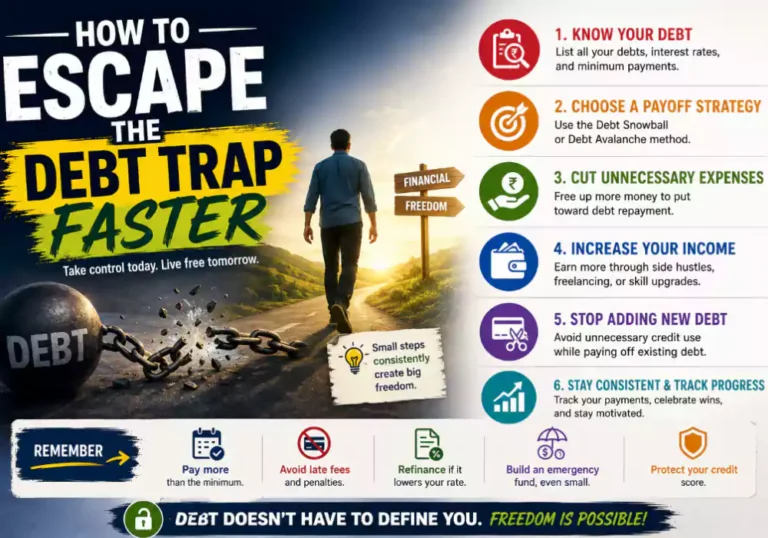
If the financial mistake involves debt, the recovery process begins with creating a clear repayment plan. High-interest debts should be prioritized first because they grow quickly and reduce long-term financial stability. Even small extra payments toward these debts can significantly reduce the total interest paid over time.

In some cases, restructuring loans or consolidating multiple debts into a single manageable payment can provide relief. The goal is to regain control of monthly cash flow so that income is not entirely consumed by interest payments.

Over time, disciplined repayment helps rebuild financial stability and restores confidence in money management.

Reducing Expenses and Resetting Lifestyle

After a financial setback, reducing unnecessary expenses becomes essential. This does not mean living without comfort, but rather temporarily removing non-essential spending that does not contribute to long-term goals.

Lifestyle adjustments may include cutting unused subscriptions, avoiding impulse purchases, and delaying luxury upgrades. These small changes free up cash flow, which can be redirected toward debt repayment or rebuilding savings.

This phase is temporary but important, as it helps reset financial behavior and prevents repeating the same mistakes.

Increasing Income Sources

Another strong recovery strategy is improving income capacity. Relying only on a single income source can slow down recovery from financial mistakes. Exploring additional income streams such as freelancing, part-time work, or skill-based projects can accelerate financial correction.

Even small additional income can make a big difference when directed toward savings or debt repayment. Over time, this also builds financial resilience and reduces dependence on a single salary.

Rebuilding Long-Term Financial Discipline

Recovery is not only about fixing the past but also about building better habits for the future. Once stability begins to return, it is important to restart investing, even with small amounts. This helps rebuild confidence and reintroduces the habit of long-term wealth creation.

Action Plan – Better Financial Decisions Starting Today

Improving your financial future does not depend on a single big move. It depends on a clear, repeatable action plan that you follow consistently. When you convert financial knowledge into daily habits, your money decisions start working in your favor instead of against you.

The goal of this action plan is simple: reduce wasteful spending, increase savings consistency, and build long-term wealth step by step. Even small actions, when followed for years, can completely change your financial direction.

Start with a simple savings habit. Even if the amount is small, the key is consistency. Setting aside a fixed portion of your income every month helps you build discipline and creates a strong foundation for future investments. Over time, this habit becomes automatic and reduces financial stress.

Next, begin investing as early as possible, even with small amounts. Waiting for the “perfect income level” often delays wealth creation unnecessarily. Regular investing through disciplined methods like SIPs allows your money to grow steadily over time and take advantage of compounding.

It is also important to control unnecessary debt. Avoid taking loans for lifestyle upgrades or impulsive purchases. Every EMI reduces your monthly financial freedom and limits your ability to save or invest. Focus on using credit only when it adds real long-term value.

Another key step is building an emergency fund. Financial stability depends not only on income but also on preparation for unexpected situations. Having a financial buffer protects your investments and prevents you from falling into debt during emergencies.

Finally, review your expenses regularly. Awareness is the foundation of financial control. When you understand where your money goes, you naturally start making better choices. Small adjustments in spending habits can free up significant money over a 10-year period.

Frequently Asked Questions

1. How can one financial decision affect 10 years of my life?

One financial decision can influence your long-term financial stability through compounding effects. Choices like taking unnecessary debt, delaying investments, or overspending reduce your ability to build wealth over time. Over 10 years, these small decisions accumulate and significantly impact your net worth and financial freedom.

2. What is the biggest financial mistake people make?

The biggest financial mistake is delaying savings and investments while increasing lifestyle expenses. This reduces the benefit of compounding and leads to low wealth creation even if income increases over time. Consistent early investing is far more powerful than high income with no discipline.

3. Can bad financial decisions be reversed?

Yes, most bad financial decisions can be corrected with discipline and a structured plan. This includes repaying high-interest debt, reducing unnecessary expenses, increasing income sources, and restarting investments. While recovery takes time, consistent effort can rebuild financial stability.

4. How do I make better financial decisions?

Better financial decisions come from awareness and discipline. Following a budget, avoiding unnecessary debt, starting early investments like SIPs, building an emergency fund, and tracking expenses regularly can significantly improve long-term financial outcomes.

5. Why is compound interest important in long-term wealth building?

Compound interest allows your money to grow by earning returns on both the principal and previous gains. Over a 10-year period, this creates exponential growth, especially when investments are started early and maintained consistently without interruptions.


Share your love

Leave a Reply

Your email address will not be published. Required fields are marked *

three − two =