
Have you ever checked your bank account a few days after payday and wondered where all your money went? You’re not alone. I’ve experienced this countless times. There was a period when I was earning more than I ever had before, yet my account balance somehow looked worse than when I was making much less. It felt frustrating, confusing, and honestly a little embarrassing. The strange thing was that I wasn’t buying luxury cars, expensive watches, or taking lavish vacations. Money simply seemed to disappear.
This feeling has become increasingly common. Recent financial studies show that many people struggle to understand where their income goes each month. A 2025 savings survey found that nearly 23% of working adults aren’t even sure how much they’re saving regularly, while many rely on random transfers rather than structured financial planning.
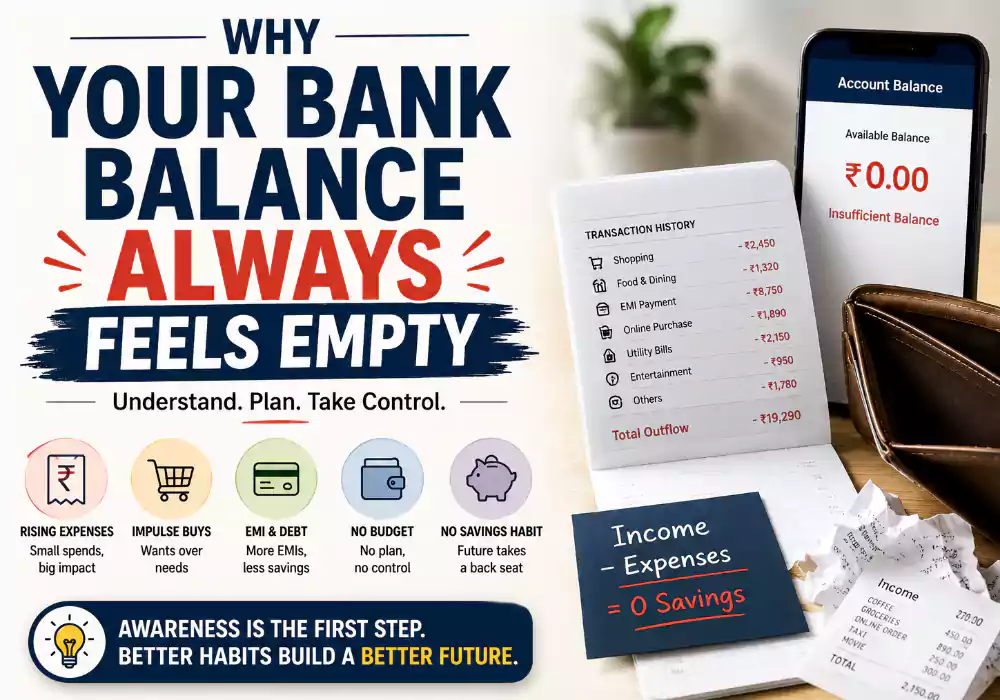
The truth is that an empty-feeling bank balance is rarely caused by one massive financial mistake. Instead, it’s usually the result of dozens of small decisions happening every day. Tiny subscriptions, convenience purchases, impulse spending, lifestyle upgrades, and a lack of clear money systems slowly drain financial resources. Understanding these patterns is the first step toward changing them. Once you recognize why your money disappears, you can begin building habits that allow your bank account to grow instead of constantly shrinking.
the Feeling of Being Broke
Many people assume that feeling broke means they don’t earn enough money. Sometimes that’s true, but often the issue is much deeper. I’ve met people with modest salaries who maintain healthy savings accounts and people with impressive incomes who constantly worry about money. The difference usually comes down to financial behavior rather than income alone.
One lesson I learned early is that income and cash flow are not the same thing. Income is what comes in. Cash flow is what remains after everything goes out. You might receive a salary increase, but if your spending increases at the same pace, your financial situation remains unchanged. This is why some people never feel financially comfortable regardless of how much they earn.
Research conducted in 2025 found that many households continue to feel their savings are insufficient even when they actively save and invest. In one survey, more than half of respondents felt that no matter how much they saved, it still wasn’t enough for the future. This highlights an important reality: financial stress isn’t always connected to income. Sometimes it’s connected to uncertainty, poor planning, or spending habits that quietly undermine financial goals.
When your bank balance feels empty, it helps to stop focusing solely on earnings and start examining financial systems. The question isn’t always “How can I make more money?” Sometimes the better question is “Where is my money going?”
The Hidden Money Leaks Most People Ignore
One of the biggest surprises during my personal finance journey was discovering how much money disappeared through expenses I barely noticed. These weren’t major purchases. They were small transactions that felt insignificant individually but became substantial over time.
Streaming subscriptions are a perfect example. Many people pay for multiple entertainment services, cloud storage platforms, music apps, productivity tools, and premium memberships. Individually, they may cost only a few hundred rupees or a few dollars each month. Combined, they can represent a significant portion of monthly expenses.
Food delivery is another major culprit. Ordering lunch because you’re busy or grabbing coffee because you’re tired seems harmless. Yet these small purchases often become habits. A daily coffee, snack, and convenience purchase can quietly consume thousands each month.
| Hidden Expense | Monthly Cost | Annual Cost |
|---|---|---|
| Streaming Services | ₹500 | ₹6,000 |
| Coffee Purchases | ₹2,000 | ₹24,000 |
| Food Delivery | ₹3,000 | ₹36,000 |
| App Subscriptions | ₹500 | ₹6,000 |
| Total | ₹6,000 | ₹72,000 |
Seeing these numbers can be eye-opening. Many people search for ways to increase income while ignoring expenses that could be reduced immediately. Tracking every rupee or dollar for thirty days often reveals spending patterns that were previously invisible.
Lifestyle Inflation: The Silent Bank Balance Killer
Lifestyle inflation is one of the most common reasons people never seem to get ahead financially. I experienced it myself after receiving a salary increase. Instead of saving more, I upgraded my phone, ate out more frequently, and justified countless “small rewards” because I felt I deserved them.
At first, these upgrades seemed reasonable. The problem wasn’t any individual purchase. The problem was the pattern. Every increase in income was matched by an increase in spending. As a result, my savings remained stagnant.
This phenomenon affects millions of people. As earnings rise, expectations rise too. A bigger apartment feels necessary. Premium services seem justified. Frequent online shopping becomes normal. Gradually, spending expands to fill available income.
Social media amplifies this issue. Every day we’re exposed to influencers showcasing vacations, gadgets, luxury products, and seemingly perfect lifestyles. Constant comparison creates pressure to spend. Even if we know those images don’t represent everyday reality, they still influence our decisions.
The key lesson is that financial progress comes from widening the gap between earnings and spending. If income grows by 20% but spending grows by 20% as well, nothing changes. True financial improvement occurs when additional income is directed toward savings, investments, or debt reduction instead of lifestyle upgrades.
The Psychology Behind Empty Bank Accounts
Money management is often portrayed as a math problem. In reality, it’s usually a behavioral problem. Understanding psychology can explain why bank balances disappear even when we know better.
Emotional spending plays a huge role. Stress, boredom, excitement, and even happiness can trigger purchases. I’ve noticed that after a difficult day, buying something online feels rewarding. The purchase creates a temporary boost in mood. Unfortunately, the satisfaction rarely lasts.
Another factor is instant gratification. Human brains naturally prefer immediate rewards over future benefits. Saving money for retirement twenty years from now doesn’t provide the same emotional satisfaction as purchasing something today. That’s why many people struggle with long-term financial goals.
Studies examining financial behavior consistently show that people often feel overwhelmed by financial decisions. This creates a cycle where avoidance replaces action. Instead of reviewing budgets or checking spending habits, people postpone financial planning because it feels stressful.
Recognizing emotional triggers is essential. Before making purchases, ask simple questions: Do I need this? Will I still want it next week? Am I solving a problem or simply responding to a feeling? These questions can dramatically reduce unnecessary spending.
Common Financial Mistakes I Learned the Hard Way
One mistake that cost me a surprising amount of money was failing to track expenses. I assumed I had a general understanding of where my money went. After reviewing actual transactions, I discovered my estimates were completely wrong.
Many people underestimate discretionary spending. Small purchases feel forgettable because they don’t create immediate financial pain. Yet repeated frequently, they become significant. Ignoring these expenses makes it impossible to identify opportunities for improvement.
Another mistake is relying too heavily on credit. Credit cards are useful tools when used responsibly, but they can create a dangerous disconnect between spending and financial reality. Purchases feel less painful because money doesn’t leave the account immediately.
I also learned that saving whatever remains at the end of the month rarely works. Human behavior tends to consume available resources. If saving depends on leftover money, there often isn’t any. This is why automated savings systems are so effective. They remove decision-making from the process.
Finally, I underestimated the impact of financial goals. Saving without a purpose feels difficult. Saving for a specific objective—an emergency fund, home purchase, investment portfolio, or travel plan—creates motivation and direction.
Step-by-Step Plan to Stop Feeling Broke
Changing financial habits doesn’t require extreme sacrifice. Small, consistent actions often produce the biggest results.
Step 1: Audit Every Expense
Spend thirty days tracking every transaction. Use a notebook, spreadsheet, or budgeting app. Record everything. This process creates awareness and reveals spending patterns that usually remain hidden.
Step 2: Create Spending Categories
Separate expenses into categories such as housing, food, transportation, entertainment, subscriptions, and savings. Categorization makes financial decisions easier because you can clearly identify areas of overspending.
Step 3: Automate Savings
One expert recommendation that appears repeatedly in personal finance research is automation. Automated transfers help create consistent saving behavior and reduce reliance on willpower.
Set up automatic transfers immediately after payday. Even a modest amount can accumulate surprisingly quickly over time.
Step 4: Build an Emergency Fund
Unexpected expenses are inevitable. Medical bills, repairs, and emergencies can destroy financial progress without a safety net. Building an emergency fund reduces stress and prevents reliance on high-interest debt.
Step 5: Review Weekly
Weekly financial reviews take only a few minutes but provide enormous benefits. Review spending, monitor goals, and make adjustments before problems become larger.
Helpful Apps and Tools for Better Money Management
Technology can simplify financial management significantly. Several tools have helped me stay organized and maintain awareness of spending habits.
Expense Tracking Apps help categorize transactions automatically and generate reports showing where money goes each month.
Budgeting Platforms allow users to set spending limits, monitor progress, and receive alerts when approaching category limits.
Banking Apps often include built-in spending insights, savings goals, and automated transfer features.
Recent surveys indicate that more than half of people who actively budget find expense-tracking tools helpful for managing finances effectively.
The best app is ultimately the one you’ll actually use consistently. Complex systems often fail because they become difficult to maintain. Simplicity usually wins.
Creating Financial Habits That Last
Sustainable financial improvement comes from habits rather than short-term motivation. Many people attempt drastic changes, only to abandon them within weeks. Lasting progress usually results from gradual adjustments.
One effective strategy is focusing on a single habit at a time. Start with tracking expenses. Once that becomes automatic, move to budgeting. Then automate savings. Building habits sequentially reduces overwhelm and increases consistency.
Another important principle is making progress visible. Watching savings grow creates momentum. Even modest increases provide encouragement and reinforce positive behavior.
Financial success isn’t about perfection. Everyone makes mistakes. Unexpected expenses occur. Impulse purchases happen. What matters is returning to the plan rather than abandoning it entirely.
Recent trends even show a growing movement toward what financial experts call “revenge saving,” where individuals intentionally prioritize saving after recognizing how overspending affected their financial security. The focus isn’t deprivation but purposeful spending aligned with long-term goals.
1. Why does my salary disappear so quickly?
Your salary may disappear quickly because of poor budgeting, lifestyle inflation, debt payments, daily spending habits, and hidden expenses like subscriptions or food delivery. Many people also spend emotionally without tracking their monthly expenses properly.
2. What is the biggest reason people stay broke?
One of the biggest reasons people stay broke is spending more money than they earn. Poor financial discipline, lack of savings, unnecessary debt, and impulse purchases can slowly damage long-term financial stability.
3. How can I stop living paycheck to paycheck?
Start by creating a monthly budget plan, reducing unnecessary expenses, and saving money before spending. Tracking daily expenses and paying off high-interest debt can also improve cash flow and personal finance management.
You can use a Budget Planner Calculator or Expense Tracker Tool to monitor spending more effectively.
4. How much money should I save every month?
A common financial rule is to save at least 20% of your monthly income. However, the ideal savings amount depends on your salary, living expenses, debt obligations, and financial goals.
You can calculate your target savings using a Savings Goal Calculator or Emergency Fund Calculator.
5. Why is budgeting important for financial stability?
Budgeting helps control spending, improve savings, and reduce financial stress. A proper monthly budget ensures your income is allocated toward important expenses, investments, and long-term financial goals instead of unnecessary spending.