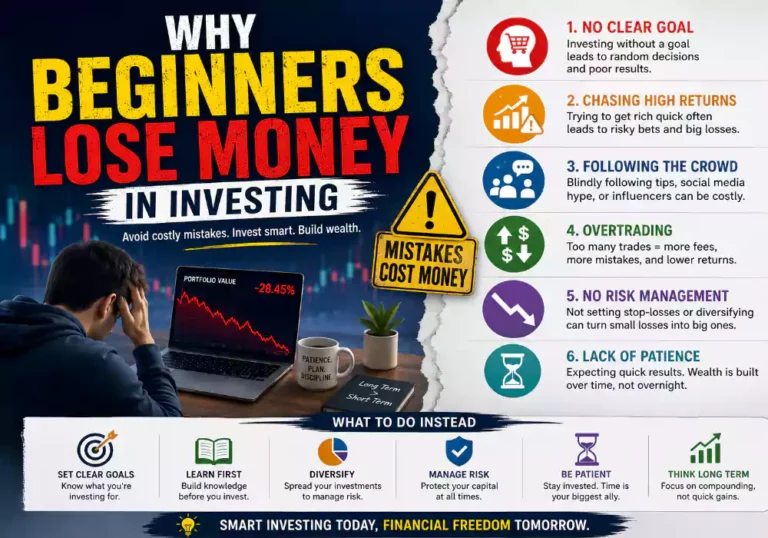


The Growing Popularity of Stock Market Tips
Stock market tips have become incredibly popular over the last few years. Open any social media platform, and you’ll find countless people sharing “hot stocks,” “next multibaggers,” and “guaranteed winners.” The rise of online investing platforms has made stock market participation easier than ever. While this accessibility is positive, it has also created an environment where investment advice spreads rapidly, often without proper verification.
Many beginner investors are drawn toward tips because they appear to offer a shortcut. After all, researching companies takes time, reading annual reports can feel overwhelming, and understanding financial statements requires effort. A simple message claiming that a stock will double in six months sounds much more appealing.
Recent regulatory warnings have highlighted a growing number of stock market scams and misleading investment recommendations circulating through social media channels. Market regulators have specifically advised investors not to rely on unsolicited tips from unverified sources and to avoid investment groups promising unrealistic returns.
Social Media and Instant Investment Advice
Today’s investors receive stock recommendations through YouTube videos, Telegram channels, WhatsApp groups, Instagram reels, and online communities. The problem isn’t the availability of information. The problem is that information often arrives without context.
A stock recommendation might tell you what to buy but rarely explains why. Even when explanations are provided, important details such as valuation, debt levels, industry risks, and competitive challenges may be ignored. This creates an illusion of certainty where uncertainty actually exists.
Why New Investors Are Easily Attracted
New investors often enter the market with excitement and optimism. They see stories of people turning small investments into large profits and naturally want similar results. Unfortunately, this mindset can make them vulnerable to persuasive stock tips.
The promise of quick gains triggers emotions that frequently override rational decision-making. Instead of asking whether a business is fundamentally strong, investors start asking whether everyone else is buying it.
My First Experience With Stock Tips
Like many retail investors, I was once attracted by stock market tips. Early in my investing journey, a friend recommended a small-cap stock that was supposedly about to rise sharply. The confidence behind the recommendation was convincing. Charts looked promising, social media discussions were enthusiastic, and success stories were everywhere.
Without conducting proper research, I bought shares simply because others seemed confident. Initially, the stock moved slightly higher, reinforcing my belief that I had made a smart decision. Then reality arrived.
The Excitement of Easy Money
The most dangerous part of following tips is that they occasionally work. When a stock rises shortly after you buy it, you begin to trust the source more. Confidence increases, position sizes grow larger, and risk management becomes less important.
This creates a cycle where investors start believing that investing is easy. The market, however, has a way of correcting overconfidence.
What Happened After Following the Tip
Within a few weeks, the stock began falling. News emerged that challenged the optimistic narrative surrounding the company. Suddenly, the same people who had recommended the stock stopped talking about it.
I learned a valuable lesson: the people sharing tips rarely share responsibility for losses. Investors bear all the risk while tip providers face little consequence when predictions fail.
How Stock Tips Usually Work
Stock tips can come from many sources. Some originate from experienced analysts, while others come from friends, relatives, influencers, or anonymous online accounts. The challenge is determining which recommendations deserve attention.
Not every tip is fraudulent. However, even honest recommendations can be unsuitable for your financial goals, risk tolerance, or investment horizon.
Sources of Stock Market Tips
Common sources include:
- Social media influencers
- Telegram groups
- WhatsApp communities
- Television experts
- Friends and family
- Online forums
- Brokerage recommendations
Each source has different motivations, incentives, and levels of expertise.
The Hidden Motives Behind Many Recommendations
Some recommendations are designed to attract followers. Others generate advertising revenue. In extreme cases, stock promoters buy shares first and then encourage others to purchase them later.
Investigations and enforcement actions have highlighted cases where social media channels promoted low-liquidity stocks after accumulating positions, allowing promoters to benefit when retail investors drove prices higher.
Major Risks of Following Stock Market Tips
The dangers of blindly following stock tips extend beyond financial losses. They can also damage confidence, create poor investing habits, and encourage emotional decision-making.
Lack of Research
The biggest risk is investing without understanding the business. If you cannot explain how a company makes money, who its competitors are, and what risks it faces, you are investing blindly.
Research creates conviction. Tips create dependence.
When markets become volatile, investors who rely on tips often panic because they lack a clear understanding of why they own a stock.
Timing Problems
Even a good stock can become a poor investment if purchased at the wrong price. Many public recommendations reach retail investors after professional investors have already acted.
By the time a stock becomes popular on social media, much of the upside may already be gone.
Pump-and-Dump Schemes
Pump-and-dump schemes remain a serious concern. Operators purchase shares, generate excitement through aggressive promotion, attract buyers, and then sell into the rising demand.
Retail investors are often left holding shares after the promotional campaign ends. Regulatory actions continue to target such activities, especially those conducted through social media networks and messaging groups.
Emotional Decision-Making
Fear and greed drive many investment mistakes. Tips frequently amplify both emotions.
When prices rise, greed encourages investors to buy more. When prices fall, fear encourages panic selling. Neither reaction is based on careful analysis.
Research and market observations consistently show that investor behavior plays a significant role in investment outcomes. Emotional decisions often contribute more to losses than market conditions themselves.
Why Social Media Tips Are Becoming More Dangerous
The influence of social media on investing has grown dramatically. Platforms reward engagement, not accuracy. Sensational predictions often receive more attention than balanced analysis.
Recent surveys indicate that a significant percentage of investors use social media and AI-generated content to guide investment decisions, raising concerns about misinformation and financial losses.
Telegram, WhatsApp, and YouTube Influencers
Many influencers provide educational content that can be useful. The challenge arises when education turns into direct stock recommendations without proper disclosures.
Regulators have repeatedly warned investors about fake trading groups, unrealistic return promises, and unregistered advisors operating through social platforms.
Fake Success Stories and Screenshots
One tactic frequently used by promoters involves showcasing profitable trades while hiding losses. Screenshots can be selective, edited, or presented without context.
A trader may share ten winning trades and quietly ignore twenty losing ones. Followers see only the success, creating unrealistic expectations.
Common Mistakes Investors Make
The stock market rewards discipline, patience, and analysis. It punishes shortcuts.
Chasing Trending Stocks
Many investors buy stocks after large rallies because they fear missing out. Unfortunately, buying after significant price increases often increases risk.
Community discussions among investors repeatedly identify chasing hype-driven stocks as one of the most common mistakes retail participants make.
Ignoring Risk Management
Risk management may not be exciting, but it is essential. Investors frequently focus on potential profits while ignoring potential losses.
Questions such as “How much can I lose?” should be asked before investing, not afterward.
Investing Without Understanding the Business
Owning a stock means owning a small part of a business. If you would not buy the entire business after studying it, why buy even a small share of it?
Understanding products, management quality, revenue growth, debt levels, and industry trends helps create informed decisions.
Safer Alternatives to Following Tips
Successful investing does not require predicting the next multibagger. It requires a repeatable process.
Building Your Own Research Process
Create a checklist before investing:
- Understand the business model.
- Review revenue and profit growth.
- Examine debt levels.
- Study management quality.
- Compare valuation with competitors.
- Identify major risks.
A structured process reduces emotional decisions.
Using Reliable Investment Tools
Useful platforms include:
| Tool Type | Purpose |
|---|---|
| Stock Screeners | Filter companies based on financial metrics |
| Annual Reports | Understand business performance |
| Investor Presentations | Learn management strategy |
| Financial News Platforms | Track developments |
| Company Filings | Verify official information |
These resources provide more reliable insights than anonymous online tips.
Learning Basic Fundamental Analysis
Fundamental analysis does not require advanced finance degrees. Start with simple metrics:
| Metric | What It Shows |
| Revenue Growth | Business expansion |
| Profit Margin | Efficiency |
| Debt-to-Equity | Financial stability |
| Return on Equity | Capital efficiency |
| Earnings Growth | Profitability trend |
Understanding these basics significantly improves decision quality.
Step-by-Step Guide to Evaluating Any Stock
Instead of asking, “Who recommends this stock?” ask, “Does this company deserve my investment?”
Step 1: Check Company Fundamentals
Start by understanding the company’s products, services, customers, and industry position. A strong business usually has a clear competitive advantage and sustainable demand.
Read annual reports, earnings presentations, and management discussions. These documents provide valuable insights unavailable in most tip-based recommendations.
Step 2: Review Financial Performance
Look for consistent revenue growth, improving profitability, manageable debt, and healthy cash flow.
One strong quarter is not enough. Focus on multi-year trends that demonstrate resilience and operational strength.
Step 3: Assess Valuation and Risks
A great company can still become a poor investment if purchased at an unreasonable valuation.
Consider factors such as:
- Industry competition
- Regulatory risks
- Economic conditions
- Debt obligations
- Market expectations
Every investment carries risk. The goal is understanding those risks before investing.
Useful Tools and Platforms for Independent Research
Over time, I found that independent research consistently produced better decisions than blindly following recommendations.
Some useful resources include company annual reports, stock screening platforms, investor presentations, regulatory filings, and official exchange announcements. These sources may not provide exciting headlines, but they provide something far more valuable: reliable information.
Investor education resources from regulators repeatedly emphasize conducting due diligence, avoiding guaranteed-return claims, and relying on verified professionals when advice is needed.
Another lesson I learned is that investing should not feel like gambling. If a decision depends entirely on someone else’s prediction, the risk is probably higher than it appears.
1. Why are stock market tips risky?
Stock market tips are risky because they often lack proper research, may involve hidden agendas, and encourage emotional decision-making instead of disciplined investing.
2. Do most retail traders lose money?
Yes. Recent SEBI-related reports showed that nearly 91% of retail F&O traders lost money in FY25.
3. How can beginners avoid fake stock tips?
Beginners should verify information independently, avoid guaranteed return claims, research company fundamentals, and never invest based solely on social media hype.
4. Are Telegram and WhatsApp trading groups trustworthy?
Many trading groups are unreliable because they may spread rumors, manipulate stocks, or promote speculative trades without accountability.
5. What is a safer alternative to following stock tips?
Safer alternatives include long-term investing, index funds, SIPs, diversified portfolios, and learning fundamental analysis before investing.