

Why Smart People Still Struggle With Money
For years, I assumed that making more money would automatically solve financial problems. Like many people, I believed that a higher salary was the missing piece. What surprised me was that several friends who earned significantly more than I did were still stressed about bills, credit cards, and savings. Some earned double my income but seemed trapped in the same cycle of financial pressure. That experience taught me an important lesson: being broke is often connected to habits and decisions rather than income alone.
Recent personal finance studies and financial experts continue to highlight common mistakes such as poor budgeting, credit card misuse, lack of emergency savings, and delayed investing as major reasons people struggle financially.
The good news is that money habits can be changed. You do not need a finance degree or a six-figure salary to improve your financial situation. Small adjustments made consistently can create dramatic results over time. In this article, we’ll explore 15 money mistakes that quietly keep people broke and, more importantly, how to fix them.
1 – Living Beyond Your Means
Living beyond your means is one of the fastest ways to stay financially stuck. This happens when your spending consistently exceeds what you earn. It may not feel obvious at first because credit cards, buy-now-pay-later services, and easy loans can temporarily hide the problem. Eventually, though, the numbers catch up.
I once upgraded my phone, bought expensive gadgets, and dined out frequently after receiving a salary increase. For a few months, everything seemed fine. Then I realized my savings account looked exactly the same as before. The extra income had disappeared into lifestyle upgrades.
A simple rule can help: spend less than you earn, no matter how much you make. Financial freedom begins when income grows faster than expenses. Track major purchases carefully and ask yourself whether each purchase improves your life or simply provides a temporary emotional boost.
2 – Not Tracking Where Your Money Goes
Many people know exactly how much they earn but have no idea where their money disappears every month. Small expenses often seem harmless individually, but together they can consume a large portion of income.
When I first started tracking expenses using a budgeting app, I discovered that food delivery, online subscriptions, and random impulse purchases were costing far more than I expected. The numbers were shocking. What felt like occasional spending had become a recurring financial leak.
Apps such as Wallet, Money Manager, YNAB, and even a simple spreadsheet can reveal spending patterns. Once you know where your money goes, you gain the power to make intentional decisions. Financial awareness is often the first step toward lasting improvement.
3 – Having No Monthly Budget
Many people avoid budgeting because they think it feels restrictive. In reality, a budget creates freedom by giving every rupee or dollar a purpose.
Financial experts consistently identify the absence of budgeting as one of the most common financial mistakes people make.
A budget does not need to be complicated. One popular method is the 50/30/20 rule:
| Category | Percentage |
|---|---|
| Needs | 50% |
| Wants | 30% |
| Savings & Investments | 20% |
This framework provides a starting point rather than a strict rule. The key is knowing how much money is allocated for essentials, enjoyment, and future goals. Without a budget, spending decisions become reactive instead of intentional.
4 – Saving Whatever Is Left Over
One of the biggest financial lessons I learned was that saving at the end of the month rarely works. Most months, nothing is left.
Instead, successful savers follow the “pay yourself first” principle. The moment income arrives, a portion automatically moves into savings or investments. Whatever remains becomes the spending budget.
Many financial experts recommend automating this process because automation removes emotion and decision fatigue.
Even saving a small amount consistently creates momentum. Building wealth is less about occasional large deposits and more about long-term consistency.
5 – Ignoring an Emergency Fund
Life rarely follows a perfect plan. Medical expenses, job loss, vehicle repairs, and family emergencies can appear without warning.
Without an emergency fund, people often turn to high-interest debt. This creates a second problem after the original emergency has passed.
Experts generally recommend maintaining three to six months of essential expenses in an emergency fund.
An emergency fund acts like a financial shock absorber. It provides breathing room when unexpected challenges arise and prevents temporary setbacks from becoming long-term financial disasters.
6 – Depending Too Much on Credit Cards
Credit cards are useful tools when managed responsibly. The problem begins when they become extensions of income rather than payment methods.
According to recent financial surveys, credit card debt remains one of the most common financial regrets among consumers.
The danger lies in carrying balances month after month. High interest rates can quickly turn a small purchase into a much larger expense. If possible, pay your credit card balance in full every month. Treat credit cards as convenience tools, not borrowing tools.
7 – Lifestyle Inflation After Every Raise
Lifestyle inflation occurs when spending rises every time income increases. Instead of becoming wealthier, people simply upgrade their lifestyle.
I’ve seen people celebrate promotions by immediately upgrading their car, apartment, gadgets, and monthly expenses. A year later, they are earning more but saving no more than before.
The smartest approach is to direct part of every raise toward savings, investments, or debt reduction. This allows your financial position to improve alongside your income.
8 – Buying Things to Impress Others
Social media has made comparison easier than ever. We constantly see vacations, luxury purchases, designer clothing, and expensive lifestyles.
The challenge is that we often compare someone else’s highlight reel to our everyday reality.
Buying things to impress others creates a dangerous cycle. The satisfaction is temporary, but the financial consequences can last for years. Before making a purchase, ask a simple question: “Would I still buy this if nobody else ever saw it?”
That question alone can prevent countless unnecessary expenses.
9 – Delaying Investing
Many people postpone investing because they think they need large amounts of money to begin. This belief can be costly.
Time is one of the most powerful factors in wealth building because of compound growth. Starting early often matters more than starting with large amounts.
Even small monthly investments into diversified mutual funds, index funds, retirement accounts, or SIPs can grow significantly over long periods. Financial experts repeatedly emphasize that delaying investments can reduce long-term wealth potential.
The perfect investment amount does not exist. Starting today is usually better than waiting for tomorrow.
10 – Not Understanding Debt
Not all debt is equal. Some debt may help build assets, while other forms can become financial burdens.
The biggest issue is borrowing money without fully understanding interest rates, repayment schedules, and total costs. Many people focus only on monthly payments while ignoring the overall expense.
Before taking any loan, calculate:
- Total repayment amount
- Interest cost
- Loan duration
- Impact on monthly cash flow
Understanding debt transforms borrowing from an emotional decision into a financial calculation.
11 – Paying for Unused Subscriptions
Subscription services are convenient because they operate quietly in the background. Unfortunately, that convenience can become expensive.
Streaming services, software subscriptions, gym memberships, cloud storage plans, and mobile apps often continue charging long after people stop using them.
I once reviewed my bank statement and discovered several subscriptions I had forgotten existed. Canceling them immediately freed up money for savings.
A quarterly subscription audit can identify hidden expenses and improve cash flow without reducing quality of life.
12 – Shopping Without a Plan
Impulse shopping can destroy even the best financial intentions.
Retailers spend billions designing stores and websites to encourage emotional purchases. Limited-time offers, flash sales, and countdown timers are specifically designed to trigger urgency.
One strategy that works surprisingly well is the 24-hour rule. If a purchase is not essential, wait 24 hours before buying it. For larger purchases, wait a week.
Most impulse purchases lose their appeal once emotions settle. This simple habit can save hundreds or thousands every year.
13 – Ignoring Insurance and Risk Protection
Insurance may not feel exciting, but it protects years of financial progress.
A major medical event, accident, or unexpected loss can create expenses far larger than most savings accounts can handle. Financial experts frequently stress the importance of balancing savings, investments, and protection.
The goal is not to buy every insurance product available. Instead, focus on appropriate coverage for health, life, home, and essential assets based on your situation.
Think of insurance as a financial safety net rather than an investment.
14 – Not Setting Financial Goals
Money without direction tends to disappear.
Specific goals provide motivation and clarity. Instead of vaguely wanting to “save more,” create measurable objectives.
Examples include:
- Save ₹1 lakh emergency fund.
- Pay off credit card debt in 12 months.
- Invest ₹5,000 monthly.
- Build a retirement corpus.
- Save for a home down payment.
Clear goals make financial decisions easier because every spending choice can be evaluated against a meaningful target.
15 – Waiting for the Perfect Time to Start
One of the most expensive mistakes is waiting.
People wait until they earn more, until markets improve, until debts disappear, until next month, or until next year. The perfect moment rarely arrives.
Many individuals who achieve financial stability start with imperfect circumstances. They begin with small savings, small investments, and small changes. Over time, those actions compound into significant results.
Progress matters more than perfection. The sooner you start, the more opportunities you create for future growth.
Step-by-Step Plan to Fix These Money Mistakes
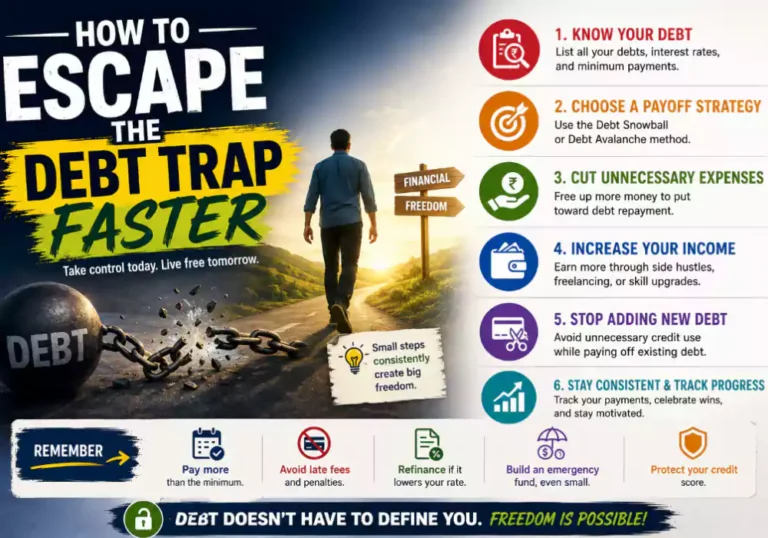
If several of these mistakes sound familiar, don’t worry. Most people make at least a few of them. Here is a practical action plan:
Step 1: Track Expenses for 30 Days
Record every expense using an app or spreadsheet.
Step 2: Create a Budget
Use a budgeting framework that fits your lifestyle.
Step 3: Build an Emergency Fund
Start with one month’s expenses and gradually increase it.
Step 4: Pay Off High-Interest Debt
Focus on the highest-interest balances first.
Step 5: Automate Savings
Schedule automatic transfers on payday.
Step 6: Begin Investing
Start small and increase contributions over time.
Step 7: Review Financial Progress Monthly
Track improvements and adjust goals as needed.
Consistency beats intensity. Small actions repeated monthly often outperform dramatic changes that last only a few weeks.
1. What is the biggest money mistake people make?
One of the biggest mistakes is spending more than they earn. This habit often leads to debt, financial stress, and an inability to build savings.
2. How much should I keep in an emergency fund?
Most financial experts recommend saving three to six months of essential living expenses, depending on income stability and family responsibilities.
3. Is budgeting really necessary?
Yes. A budget provides visibility into your finances and helps ensure that spending aligns with your goals.
4. Should I save money or invest money first?
Ideally, build a basic emergency fund first, then begin investing while continuing to grow savings.
5. How can I stop impulse spending?
Use waiting periods, shopping lists, spending limits, and expense tracking tools. These strategies reduce emotional purchasing decisions and encourage intentional spending.