
Why Buy Now, Pay Later Has Become So Popular
Over the last few years, Buy Now, Pay Later (BNPL) services have moved from being a niche payment option to becoming a mainstream part of online shopping. Whether you’re purchasing electronics, clothing, fitness equipment, or even groceries, there’s a good chance you’ve seen an option to split the cost into smaller payments. The appeal is obvious. Instead of paying the full amount upfront, you can spread the cost over several weeks or months.
The growth of BNPL has been significant worldwide. Industry reports show that BNPL adoption continues to rise, with transaction volumes increasing steadily as more retailers integrate installment payment options. Market researchers estimate that the global BNPL sector is still expanding and remains one of the fastest-growing payment methods in e-commerce. Recent studies also show that younger consumers are among the most active users of these services.
The Appeal of Instant Gratification
One reason BNPL works so well is that it aligns perfectly with modern shopping behavior. We live in a world where convenience is king. Food arrives in minutes, movies stream instantly, and products show up at our door within days. BNPL fits naturally into this environment because it removes the pain of paying the entire amount immediately.
When shoppers see a ₹20,000 purchase broken into four payments of ₹5,000, the expense feels more manageable. Psychologically, smaller numbers appear less intimidating. That perception often influences buying decisions more than people realize. Many consumers focus on the installment amount rather than the total purchase price.
How BNPL Differs From Credit Cards
At first glance, BNPL and credit cards seem similar because both allow delayed payment. The difference lies in the structure. Traditional credit cards provide a revolving credit line, while BNPL generally splits a purchase into fixed installments. Many BNPL plans advertise zero interest if payments are made on time.
This simplicity makes BNPL attractive. However, simplicity can sometimes hide complexity. While a single installment plan may be easy to manage, multiple plans across different purchases can quickly become difficult to track.
Understanding How Buy Now, Pay Later Works
Before discussing costs, it helps to understand exactly how BNPL functions. Most providers allow consumers to divide a purchase into four equal payments. The first installment is paid at checkout, while the remaining payments are automatically deducted over the following weeks.
Common Payment Structures
Different platforms offer different repayment schedules. The most common model is the “Pay in Four” system. Some providers also offer longer financing periods for larger purchases such as laptops, furniture, or fitness equipment.
| Payment Type | Typical Duration | Interest |
|---|---|---|
| Pay in 4 | 6-8 weeks | Usually 0% |
| Monthly Installments | 3-12 months | May apply |
| Extended Financing | 12-48 months | Often applies |
The flexibility sounds appealing, but every payment obligation becomes part of your future budget.
Popular BNPL Platforms
Several major platforms dominate the market, including Klarna, Afterpay, Affirm, PayPal Pay Later, Zip, and Sezzle. Consumer studies have found that usage continues to grow as merchants increasingly offer installment options at checkout.
The important thing to remember is that each platform may have slightly different fee structures, repayment schedules, and policies regarding missed payments.
The Costs Most People Don’t Notice
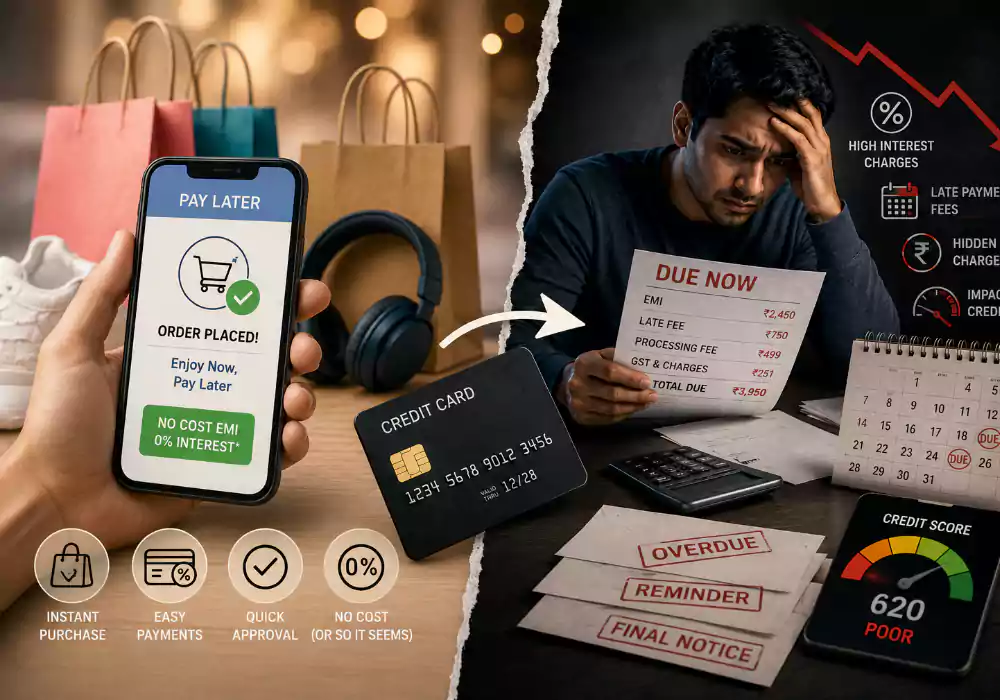
The biggest misunderstanding about BNPL is the belief that “interest-free” means “cost-free.” Those are two very different things.
Late Fees and Penalties
The most obvious cost appears when payments are missed. Depending on the provider, late fees may be charged immediately. While a single late fee may seem small, repeated missed payments can increase the overall cost of a purchase significantly.
I’ve personally seen friends purchase items they could technically afford, only to forget an installment date because they had multiple payment plans active at once. A missed payment that started as a minor oversight turned into unnecessary fees and financial stress.
Recent consumer surveys indicate that late payments among BNPL users remain a concern, with a substantial share of users reporting missed payments during the previous year.
Multiple Payment Commitments
This is where the hidden cost becomes more dangerous. One installment plan feels manageable. Two seem harmless. Five active plans can create confusion.
Imagine:
- ₹2,000 monthly for headphones
- ₹3,000 monthly for shoes
- ₹4,000 monthly for a smartphone
- ₹1,500 monthly for fitness gear
Individually, none seem expensive. Combined, they become a significant recurring expense.
Subscription-Like Spending Habits
BNPL can create spending patterns similar to subscriptions. Instead of evaluating each purchase independently, consumers become accustomed to ongoing installment obligations. This can make monthly expenses feel larger than expected and reduce financial flexibility.
My Experience Using BNPL Services
Several years ago, I used a BNPL service to purchase a smartwatch. The monthly installments seemed incredibly reasonable. I barely noticed them in my budget.
The Purchase That Seemed Affordable
At checkout, the watch cost approximately the same as a weekend outing when divided into installments. Because the payment appeared small, I didn’t spend much time evaluating whether I truly needed it.
That decision taught me something important. The affordability of a monthly payment doesn’t necessarily mean the product itself is affordable.
The Budgeting Lesson I Learned
A few weeks later, I considered financing another purchase. Fortunately, I reviewed my existing obligations before proceeding. Seeing multiple future deductions listed together completely changed my perspective.
That experience highlighted a common problem: people often assess BNPL purchases one at a time rather than evaluating their total installment commitments.
Hidden Financial Risks
Overspending Without Realizing It
One of the most significant risks associated with BNPL is overspending. Behavioral finance research consistently shows that consumers spend more when payment is delayed.
When the full purchase price isn’t immediately deducted from your account, the financial impact feels less severe. This psychological effect can encourage larger purchases and impulse buying.
Financial experts frequently warn that installment-based purchasing reduces spending friction, making it easier to justify purchases that might otherwise be postponed.
Impact on Monthly Cash Flow
Cash flow is the lifeblood of personal finance. Even if you earn a healthy income, too many obligations can strain your budget.
Every installment payment reduces future flexibility. Unexpected expenses such as medical bills, car repairs, or household emergencies become harder to manage when a portion of future income is already committed.
Debt Stacking Problems
Debt stacking occurs when multiple BNPL plans overlap. Research from consumer finance agencies has highlighted concerns about users holding loans across several providers simultaneously. Because some BNPL obligations historically weren’t reported in traditional credit systems, consumers could accumulate obligations across multiple platforms without a complete overview.
This creates a situation where the total debt burden becomes difficult to monitor.
Comparing BNPL With Other Payment Options
BNPL vs Credit Cards
| Factor | BNPL | Credit Card |
| Fixed Payments | Yes | Usually No |
| Interest-Free Options | Common | Limited |
| Late Fees | Possible | Common |
| Spending Flexibility | Purchase-Based | Revolving Credit |
| Risk of Overspending | High | High |
Credit cards offer flexibility but can become expensive if balances are carried. BNPL appears simpler, but multiple installment plans can become equally problematic if not managed carefully.
BNPL vs Personal Savings
From a financial health perspective, paying from savings is often the safest option when the purchase is truly affordable.
Using available savings avoids future obligations, reduces stress, and provides complete clarity about your financial position. While savings shouldn’t be depleted for every purchase, relying on cash when possible usually results in better spending decisions.
Warning Signs You’re Overusing BNPL
Several warning signs suggest BNPL usage may be becoming problematic:
- You cannot remember how many active installment plans you have.
- Future paychecks already feel allocated before they arrive.
- You use BNPL for routine essentials.
- You frequently delay checking account balances.
- You rely on new financing to cover existing obligations.
Recent reports have noted growing use of BNPL for everyday expenses such as groceries, a trend many financial professionals view as a cautionary signal.
Step-by-Step Guide to Using BNPL Responsibly
Before You Click Buy
Step 1: Ask whether you would still purchase the item if BNPL wasn’t available.
Step 2: Calculate the full purchase price instead of focusing on installment amounts.
Step 3: Review all existing installment obligations.
Step 4: Consider whether an emergency expense would make future payments difficult.
Step 5: Compare the purchase against your monthly savings goals.
This process takes only a few minutes but can prevent months of financial stress.
Managing Active Installments
If you already use BNPL, organization is essential.
Create a simple spreadsheet or budgeting app that tracks:
- Purchase date
- Remaining balance
- Due dates
- Monthly payment amount
- Provider name
Apps such as budgeting trackers, personal finance dashboards, and calendar reminders can make repayment management much easier.
Common Mistakes to Avoid
Many BNPL users make similar mistakes.
The first is focusing exclusively on installment size. Small payments can disguise large spending commitments. The second is assuming future income will always cover future obligations. Life rarely follows perfect plans. The third is maintaining multiple active plans without tracking them carefully.
Another common mistake involves using BNPL for impulse purchases. If a product wasn’t in your budget yesterday but suddenly seems affordable because of installments, that should trigger extra caution.
Research and consumer surveys continue to highlight concerns about overspending, loan stacking, and missed payments among frequent BNPL users. These patterns don’t affect everyone, but they appear often enough to deserve attention.
1. Is Buy Now, Pay Later better than a credit card?
BNPL can be useful for short-term installment payments, but credit cards often provide stronger consumer protections and rewards. The better option depends on spending habits and repayment discipline.
2. Can BNPL hurt my credit score?
Yes, many providers now report payment activity to credit bureaus. Missed payments or excessive borrowing can negatively impact your credit history.
3. Why do people overspend with BNPL?
Consumers tend to focus on smaller installment amounts instead of total purchase costs. This reduces the psychological “pain of paying” and encourages impulse buying.
4. Are BNPL services truly interest-free?
Some are interest-free if payments are made on time, but late fees, penalties, and extended financing options can add significant costs.
5. How can I use BNPL responsibly?
Limit installment purchases, track payment dates carefully, avoid impulse shopping, and ensure repayments fit comfortably within your monthly budget.